
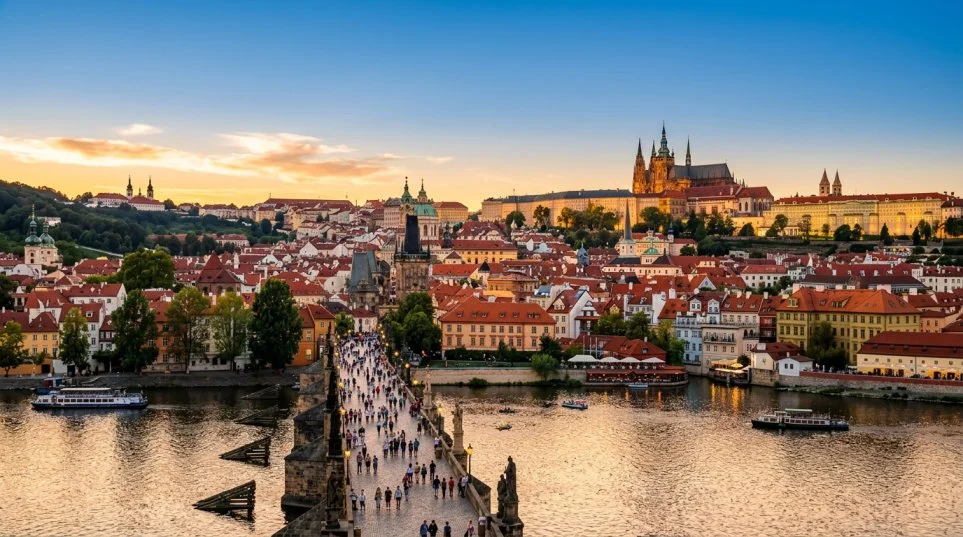
There’s a moment, somewhere around your second espresso on a cobblestoned side street in Prague, when it dawns on you that this city is almost unfairly beautiful. The Gothic spires, the honey-coloured baroque facades, the river quietly catching the last of the afternoon light — it all feels a little too perfect, like someone painted a medieval fairy tale and forgot to tell the city it wasn’t real.
I visited Prague for the first time on a late-autumn city break, three days that I’d mapped out with the obsessive precision of someone who hates missing a great meal or a great view. What I found was a city that rewards walkers, rewards curiosity, and — crucially — rewards planning. Three days is genuinely enough to feel the soul of Prague, if you spend those days well.
This Prague 3-day itinerary covers the iconic landmarks — Prague Castle, Charles Bridge, Old Town Square — but also the quiet streets that most visitors rush past. Whether you’re planning a Prague weekend getaway, a romantic city break, or your first solo European adventure, this guide will help you make every hour count.
Essential Prague Travel Tips

Prague is one of Europe’s most visitor-friendly cities, but a few practical details will save you time and money before you even land.
Getting Around
The historic core is compact and almost entirely walkable. The metro, trams, and buses cover everything else, and a 24-hour or 72-hour travel pass (available at metro stations or the airport) costs a fraction of what you’d spend on taxis. Resist the ride-share temptation in the centre — you’ll be faster on foot.
Currency & Costs
The Czech Republic uses the Czech Koruna (CZK), not the Euro. Prague remains one of the more affordable European capitals — a proper sit-down lunch costs around 150–250 CZK (roughly €6–10), and a half-litre of excellent local beer in a neighbourhood pub will run you 40–60 CZK. Avoid the currency exchange kiosks around Old Town Square; they have notoriously poor rates. Use an ATM or a multi-currency travel card instead.
Best Time to Visit
Spring (April–May) and early autumn (September–October) are ideal — mild weather, manageable crowds, and the kind of golden light that makes every photograph look effortless. Summer is busy and hot; December brings Christmas markets that are genuinely magical but also genuinely packed. If you visit in January or February you’ll have Old Town Square almost to yourself, at the cost of very short days and icy temperatures.
Day 1: Old Town, Jewish Quarter & the River at Dusk

Your first day belongs to Prague Old Town — Staré Město — and the neighbourhoods that surround it. Start early. The crowds that will fill Charles Bridge by 10am are still in their hotel breakfasts at 7:30.
Morning: Charles Bridge & Old Town Square
Walk to Charles Bridge at sunrise. I know every travel guide says this, and every travel guide is right. The 14th-century stone bridge — lined with 30 baroque statues, mist rising off the Vltava, swifts diving around the bridge towers — is genuinely one of the great European experiences. Touch the plaque on the statue of St. John of Nepomuk; legend says it brings good luck, and at that hour, with the city barely stirring, you’ll half believe it.
From the bridge, head east through the winding lanes of Old Town to the Old Town Square. The Gothic twin-towered Týn Church anchors one end; the Old Town Hall with its medieval Astronomical Clock anchors another. The clock performs a small mechanical show on the hour — figures parade across two small windows — and while it’s briefer than tourists expect, the clock face itself, with its intricate astronomical dials, repays a few minutes of quiet study.
Insider tip: Climb the Old Town Hall Tower (small entrance fee) for the best overhead view of the square. Go up before 9am and you might have the viewing platform almost to yourself.
Afternoon: Josefov – the Jewish Quarter
The Jewish Quarter, Josefov, sits directly north of Old Town Square and is one of the most historically significant neighbourhoods in central Europe. The complex of six synagogues and the Old Jewish Cemetery — where headstones are stacked layer upon layer, some 12,000 people buried in a space barely larger than a city block — tells a history of a community that survived centuries of persecution in Prague’s medieval ghetto.
The combined ticket for the Jewish Museum covers all the synagogues and the cemetery and is absolutely worth purchasing. Allow two hours at minimum. The Pinkas Synagogue, whose walls are inscribed with the names of 77,297 Bohemian and Moravian Jews who perished in the Holocaust, is among the most moving memorials I have ever visited anywhere in the world.
Evening: Dinner in the Old Town
For dinner, avoid the tourist-facing restaurants directly on Old Town Square — the pricing and quality rarely match. Instead, wander a few streets south toward Betlémské náměstí or east toward Dlouhá Street, where you’ll find Czech pubs and modern bistros catering to locals as much as visitors. Traditional Czech cuisine — svíčková (beef sirloin in cream sauce), svíčková on bread dumplings, pork knee with mustard and horseradish — is hearty, flavourful, and substantially cheaper when you step even two blocks off the tourist circuit.
Day 2: Prague Castle, Malá Strana & a Hilltop Sunset

Day two crosses the river and climbs the hill. Prague Castle — Pražský hrad — is the largest ancient castle complex in the world by area, and the neighbourhood of Malá Strana (Lesser Town) that spreads below it is one of the most romantic corners of the city.
Morning: Prague Castle Complex
Arrive at Prague Castle when it opens. The castle grounds are free to enter; you pay for entry to specific buildings within the complex. The most important of these is St. Vitus Cathedral — a soaring Gothic masterpiece whose construction began in 1344 and wasn’t completed until 1929. The stained-glass windows by Alfons Mucha, bathing the nave in deep blue and gold, are extraordinary.
The Long Circuit ticket covers St. Vitus Cathedral, the Old Royal Palace, the Basilica of St. George, and the Golden Lane — a row of tiny medieval houses built into the castle fortifications that once housed castle guards and later, according to popular legend (though historians dispute this), alchemists. Whatever its history, the Golden Lane is charming and gives a tangible sense of the castle’s layered, lived-in past.
Afternoon: Malá Strana — Prague’s Most Romantic Quarter
Descend from the castle via the Old Castle Steps and you drop directly into Malá Strana. This neighbourhood, trapped between the castle hill and the river, has a quieter, more residential feel than Old Town. The baroque St. Nicholas Church (not to be confused with the one in Old Town Square) dominates Malostranské náměstí and is worth stepping inside for its overwhelming interior — all gilded plasterwork, ceiling frescoes, and chandelier grandeur.
Spend the afternoon wandering without agenda. The lanes around Kampa Island, the small park along the millrace canal at the southern tip of Charles Bridge, and the Lennon Wall — covered in decades of layered graffiti, peace messages, and Beatles tributes — all reward slow exploration. Grab a coffee at one of the small cafés and simply sit.
Evening: Sunset from Letná Park
For one of the best views in all of Prague, climb to Letná Park on the plateau north of the river. The terrace above the retaining wall offers a sweeping panorama of the city — the red rooftops of Old Town, the bridges spanning the Vltava, the castle ridge — especially beautiful in the hour before sunset. There’s a beer garden at the park’s western end. Order a Czech lager, find a bench facing the view, and congratulate yourself on three very well-spent days.
Day 3: Vinohrady, Vyšehrad & Your Own Prague

Your third day in Prague should belong to you — the sights you lingered over on days one and two, the neighbourhood you want to revisit, the museum you didn’t get to. But for those who want a structured third day, two experiences stand out.
Morning: Vyšehrad Fortress
Vyšehrad is a fortified hilltop complex south of the city centre that most visitors skip entirely — which is precisely why you should go. The grounds are free and largely untroubled by tour groups. The views over the Vltava from the ramparts are arguably better than from the castle hill. The cemetery within the complex holds the graves of many of the most celebrated Czech artists, composers, and writers, including Antonín Dvořák and Bedřich Smetana — whose symphonic poem Vltava, named for the river below, is one of the most gorgeous pieces of orchestral music ever written. The Neo-Gothic Basilica of St. Peter and St. Paul anchors the complex and is worth the small entry fee.
Afternoon: Vinohrady for Lunch & a Last Wander
Walk or tram north to Vinohrady, an early 20th-century residential neighbourhood of Art Nouveau apartment buildings, neighbourhood restaurants, and local cafés. This is where a lot of expats and younger Praguers actually live, and it has an easy, unhurried energy that’s a refreshing contrast to the tourist intensity of Old Town. Have a long lunch. Walk up to Náměstí Míru. Browse the independent bookshops and little stores on Mánesova or Blanická Street.
If you have any remaining afternoon hours, return to wherever most moved you. In my case, that was Charles Bridge just before the last of the light drained out of the sky, the river going silver-grey and the castle hill darkening behind it. I stayed longer than I planned. You probably will too.
What to Eat & Drink in Prague
Czech cuisine is underrated. It is substantially meat-focused, dairy-forward, and built around bread dumplings, pork, and root vegetables — but done well, it’s deeply satisfying. A few things worth seeking out:
- Svíčková na smetaně — braised beef sirloin in a root vegetable cream sauce with cranberry and bread dumplings. The Czech national dish. Reliably great in any Czech hospoda (pub).
- Trdelník — a spiral pastry cooked over an open flame, often filled with ice cream, sold from street carts throughout Old Town. Touristy, yes. Worth it anyway.
- Czech lager — Pilsner Urquell, Kozel, and Bernard are widely available. The local unpasteurised draft beer (tankové pivo or nefiltrované pivo) served in neighbourhood pubs is often exceptional and costs less than a bottle of water at an airport.
- Smazený sýr — fried cheese served with tartar sauce and fries. Sounds modest. Tastes glorious. Available at most Czech pubs.
3-Day Prague Itinerary at a Glance
| Day | Morning / Afternoon | Evening |
| Day 1 | Charles Bridge at sunrise → Old Town Square & Astronomical Clock → Josefov Jewish Quarter | Dinner in Old Town backstreets (Dlouhá or Betlémské Square area) |
| Day 2 | Prague Castle complex (St. Vitus Cathedral, Golden Lane) → Malá Strana, Kampa Island, Lennon Wall | Sunset beer at Letná Park terrace |
| Day 3 | Vyšehrad Fortress & cemetery → Vinohrady neighbourhood lunch & walk | Return to your favourite spot from days 1–2 |
Frequently Asked Questions About Prague
Q. Is 3 days enough for Prague?
Yes — three days is genuinely sufficient to experience Prague’s essential highlights, especially for a first visit. You can cover the Old Town and Jewish Quarter on Day 1, the Castle and Malá Strana on Day 2, and use Day 3 to explore further afield or revisit your favourite spots at a slower pace. Three days won’t exhaust Prague (it’s a city you can come back to many times), but it will give you a rich and rounded introduction.
Q. Do I need to book Prague attractions in advance?
For most of the year, you can purchase tickets at the door for Prague’s main attractions. The exceptions are the Jewish Museum (long queues in summer) and certain timed entry periods at Prague Castle — booking these online at least a day ahead is wise from May through September. If you want to do a day trip, Český Krumlov is very popular in summer; consider booking transport in advance.
Q. Is Prague safe for solo travellers?
Prague is one of Europe’s safer capitals. Violent crime against tourists is rare. The primary concerns are petty theft (pickpocketing on busy tram routes, particularly tram 22) and overcharging by unlicensed taxis or currency exchanges. Use Bolt or a licensed taxi app, use bank ATMs rather than exchange kiosks, and keep your bag in front of you on crowded public transport — and you will almost certainly have no problems.
Q. What is the best area to stay in Prague?
Staying in or immediately around Prague 1 (which covers Old Town and Malá Strana) puts you within walking distance of nearly everything in this itinerary. It’s the priciest part of the city. Prague 2 (Vinohrady and Nové Město, or New Town) offers excellent value with easy metro or tram connections and a more authentic, residential feel. Avoid staying in the outer suburbs unless you have a specific reason — the savings rarely justify the commute time.
Q. Do they accept Euros in Prague?
Some tourist-facing businesses will accept Euros, but at poor exchange rates. You’ll always get better value paying in Czech Koruna. Withdraw local currency from an ATM on arrival — look for bank-operated ATMs (Česká spořitelna, ČSOB, Komerční banka) rather than the independent exchange-operator machines, which typically charge higher fees.
Prague Will Surprise You
Prague has been drawing travellers for centuries, and it’s not hard to see why. The city has a rare quality: it is simultaneously a living, working, coffee-drinking European capital and an extraordinarily preserved window into centuries of history. Walk the right streets at the right hour and the gap between now and then collapses entirely.
Three days, done thoughtfully, is enough to fall properly in love with Prague — which, if past experience is any guide, will leave you planning a return before you’ve even boarded your flight home.
If you’re in the early stages of planning, start by booking your accommodation in Prague 1 or Vinohrady, then build your days around this itinerary. Read the opening times for Prague Castle and the Jewish Museum before you arrive, and make a reservation for at least one proper Czech dinner — somewhere with long wooden tables, cold Czech beer on tap, and a menu that includes svíčková. Everything else can be figured out on the cobblestones.
Have questions about your specific Prague trip, or want recommendations for a particular type of visit — family-friendly, budget, luxury, off-season? Leave a comment below or reach out directly. Prague is one of those cities I never get tired of talking about.

