
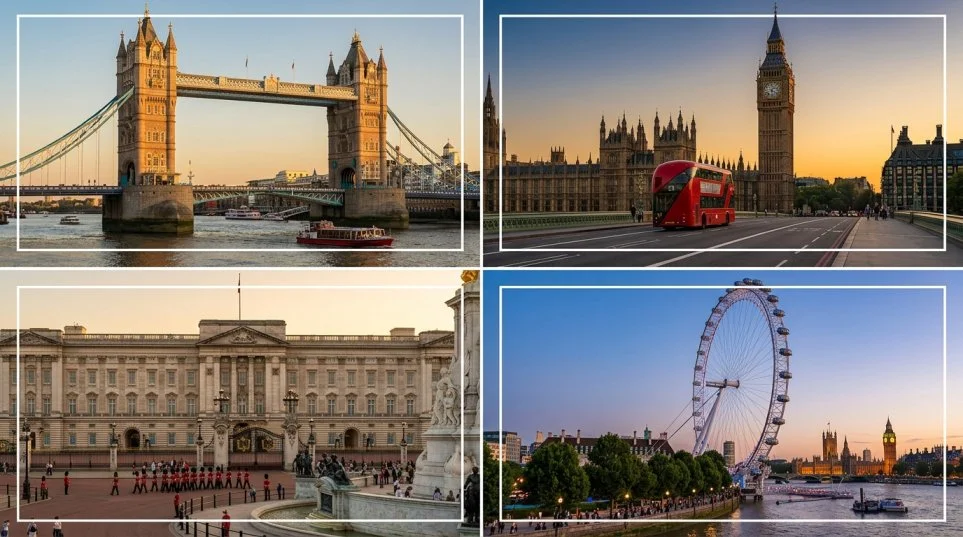
I still remember stepping out of Paddington Station for the first time, dragging a battered suitcase and absolutely convinced I had packed for the wrong weather. Spoiler: I had. It was July, I brought a rain jacket, and London rewarded me with a glorious heatwave. That trip taught me something I now tell everyone planning a London holiday — this city will always surprise you, no matter how much you plan.
London is a city that refuses to be boxed in. In a single afternoon, you can stand inside a Roman fort, eat jerk chicken from a street stall that has been trading since the 1980s, and watch a free world-class exhibition at a gallery that most tourists walk past. There is no single version of London — just layers upon layers of history, culture, and genuine surprise.
Whether you have three days or three weeks, this London travel guide covers the best things to do in London — the iconic landmarks you absolutely should not skip, the neighbourhood secrets worth seeking out, and practical tips that will save you both time and money. Let’s go.
The Unmissable London Landmarks Every Visitor Should See

Yes, everyone says visit the Tower of London or take a photo of Big Ben. And yes, those suggestions are everywhere because they are genuinely extraordinary. But there is a difference between ticking off a list and actually experiencing a place — so here is how to do the classics without feeling like you are on a conveyor belt.
1. Tower of London — More Than Just a Tourist Trap
I went in with low expectations and came out genuinely unsettled — in the best possible way. The Tower of London is 1,000 years of British history crammed into one riverside fortress, and the Yeoman Warder tours are absolutely not to be skipped. Your guide will tell you things about the medieval prison cells and the Crown Jewels vault that no guidebook covers. Arrive when it opens at 9am on weekdays to beat the crowds.
Practical tip: Buy tickets online at least 48 hours ahead — it is cheaper and skips the queue.
[Internal link opportunity: ‘Best time to visit the Tower of London’]
2. Buckingham Palace and St James’s Park — The Royal Morning Walk
Here is a London sightseeing tip most visitors miss: walk through St James’s Park first and approach the palace from the eastern end of the lake. The view of Buckingham Palace framed by willow trees is one of those moments that makes you stop mid-stride. The Changing of the Guard happens most days at 11am — check the official Royal Family website for the schedule before you go, as it varies by season.
3. Big Ben and Westminster Bridge — Worth the Photo, Worth the Walk
The view of Big Ben from Westminster Bridge is one of those images you have seen a hundred times and then, standing there in real life, it still takes your breath away. Walk across the bridge towards Lambeth and turn back — that is the angle photographers use, and now you know why. While you are in the area, pop into Westminster Abbey (advance tickets required), where 17 monarchs are buried and the weight of British history feels almost physical.
World-Class Museums: The Best Free Things to Do in London

Here is one of London’s genuinely remarkable facts: many of the world’s best museums are completely free to enter. Not discounted. Not partially free. Entirely, permanently, no-catch free. This alone makes London one of the most rewarding cities on the planet for the culturally curious traveller.
4. The British Museum — A Morning You Will Not Forget
Eight million objects. Free. That is the British Museum in two facts. The Rosetta Stone, the Elgin Marbles, the Lewis Chessmen — these are not replicas, they are the real things, sitting in open galleries. I spent four hours there once and still felt like I had only scratched the surface. My personal recommendation: download the free museum map beforehand and pick three rooms to focus on. Trying to see everything in one visit is a recipe for exhaustion and a stiff neck.
5. The Natural History Museum — Spectacular for Families
The Natural History Museum is one of the best family activities in London, and I say that as someone who visited without children and still spent two hours in the dinosaur gallery with a giant grin. The building itself is worth the trip — the Romanesque terracotta facade on Cromwell Road is genuinely stunning. Inside, the blue whale skeleton suspended from the ceiling of Hintze Hall stops people dead in their tracks every single time.
6. Tate Modern — Art and Thames Views Combined
The Tate Modern sits in a converted Bankside power station on the South Bank, and the building is half the experience. The Turbine Hall alone — ten storeys of raw industrial space — has hosted some of the most audacious art installations in history. The permanent collection is free; special exhibitions charge entry. After your visit, walk along the South Bank towards Borough Market for lunch and you have a near-perfect London afternoon.
Exploring London’s Neighbourhoods: Where the Real City Lives

The London you find in the tourist brochures is real. But the London that makes you want to move here lives in the neighbourhoods — the streets you find by wandering, the café where the owner knows your order by day two, the bookshop tucked beside a canal. If you are serious about experiencing this city, leave the main tourist route at least once.
7. Notting Hill — Pastel Houses and Portobello Road
Yes, Notting Hill looks exactly like the films. The pastel-coloured townhouses on Elgin Crescent and the surrounding streets are simply beautiful — the kind of residential streetscape that makes you understand why people obsess over London property. Portobello Road Market runs on Saturdays and is one of the best places to visit in London if you enjoy antiques, vintage fashion, and the very particular pleasure of not knowing what you are going to find.
8. Borough Market — Eat Your Way Through 1,000 Years of Food Culture
Borough Market under London Bridge has been a trading place since at least the 13th century. Today it is one of the finest food markets in Europe — not an exaggeration — with traders selling everything from unpasteurised French cheese to fresh-made Venezuelan arepas to Scottish venison pies. Go hungry, go on a Thursday or Friday when it is slightly less crowded than weekends, and budget more than you think you need.
9. Shoreditch — Street Art, Coffee, and East London Energy
If central London feels too polished for your taste, Shoreditch will recalibrate you. The streets around Brick Lane and the Old Truman Brewery are an open-air gallery — murals, paste-ups, stencils, and hand-painted pieces cover practically every available surface. The area has excellent independent coffee shops, some of London’s best street food, and a creative energy that feels genuinely different from the rest of the city. Go on a Sunday for the full market experience.
London’s Green Spaces: Parks, Gardens, and Open Air Escapes

London has more green space per capita than almost any other major global city. The Royal Parks alone cover over 5,000 acres — which is roughly the size of several large American towns dropped into the middle of a world capital. When you need to decompress between sightseeing, these spaces are essential.
10. Hyde Park — Rowing, Sunbathing, and Summer Concerts
Hyde Park is 350 acres of public parkland right in the heart of the city, and it manages to feel genuinely spacious even when thousands of people are using it simultaneously. Hire a pedalo on the Serpentine lake, catch a free Speakers’ Corner debate on a Sunday morning, or simply find a patch of grass near the Italian Gardens and do absolutely nothing productive for an hour. London encourages that.
11. Hampstead Heath — Wild Swimming and Panoramic City Views
Hampstead Heath is where Londoners go when they need to feel like they have briefly escaped their own city. The 790 acres of ancient woodland and meadow feel remarkably wild for somewhere reachable by tube. Parliament Hill, at the southern end, gives you one of the best panoramic views of the London skyline — particularly good at dusk. The swimming ponds (segregated men’s, women’s, and mixed) are a genuine London institution and open year-round.
Unique London Experiences That Most Tourists Miss

The best experiences in any city are the ones you cannot book in advance. But a few London gems are so genuinely special they deserve a specific mention — and most people walk right past them.
12. Dennis Severs’ House — The Most Unusual Place to Visit in London
Dennis Severs’ House on Folgate Street in Spitalfields is unlike anything else in London. An American artist bought an 18th-century townhouse and created a ‘still life drama’ — ten rooms frozen in time as if a Huguenot silk-weaving family had just stepped out moments ago. Half-eaten food on the table. A candle burning in the window. Ash still warm in the grate. Evening sessions are conducted in near-silence. I found it genuinely moving — a kind of living poem about what it means to inhabit a place.
13. The Sky Garden — Free Views Over London
The Sky Garden sits at the top of 20 Fenchurch Street (the ‘Walkie Talkie’ building) in the City of London, and the views are extraordinary — a 360-degree panorama of the city from 155 metres up. The garden itself is lush and genuinely beautiful. Crucially, entry is free, though you must book in advance online. An evening slot during golden hour is the move.
14. Afternoon Tea — A London Tradition Worth Taking Seriously
Afternoon tea is one of those London experiences that seems touristy until you are sitting in a quiet room at 3pm with a tiered stand of finger sandwiches, warm scones, and a pot of properly brewed Darjeeling, and you realise this is actually one of the great inventions of civilisation. You do not need to spend a fortune at a grand hotel. Sketch in Mayfair, Bettys in Harrogate (worth a day trip), and dozens of independent tea rooms offer excellent versions at a range of prices.
15. A Night at a West End Show — The London City Tour You Feel in Your Chest
The West End is the global capital of theatre, and catching a show is one of those London experiences that simply cannot be replicated anywhere else. Hamilton, Les Misérables, The Phantom of the Opera — yes, the big ones. But also look at smaller venues like the Donmar Warehouse, the Almeida, or the National Theatre’s Lyttelton stage for productions that are often more adventurous and considerably easier to get tickets for. The TKTS booth in Leicester Square sells same-day discounted tickets for many major shows.
Essential London Vacation Tips: Getting Around and Saving Money

London can be expensive — there is no getting around that. But it can also be done remarkably affordably if you know where the value is. Here are the practical logistics most travel guides bury in a sidebar:
- Use an Oyster card or tap in with a contactless bank card for all tube and bus travel. Never buy single paper tickets — they cost nearly twice as much.
- Walk more than you think you need to. Many central London attractions are 10–20 minutes apart on foot, and walking is how you stumble across the city’s best surprises.
- Eat lunch, not dinner, at restaurants you really want to try. Many offer set lunch menus at 40–50% of dinner prices.
- Stay in Zone 2 rather than Zone 1. Accommodation is meaningfully cheaper, and travel into the centre takes only a few extra minutes.
- The Elizabeth line (Crossrail) has transformed east-west travel. It is faster, quieter, and more comfortable than the older tube lines for journeys across the city.
[Internal link opportunity: ‘London Oyster Card Guide for Visitors’]
Frequently Asked Questions About What to Do in London
Q. How many days do you need in London?
Three to five days is enough to cover the major landmarks and get a feel for two or three neighbourhoods. A week lets you breathe, make detours, and start to feel like a temporary local rather than a tourist. If you only have two days, be ruthless: pick two or three experiences you genuinely care about rather than rushing through ten.
Q. What are the best free things to do in London?
London’s free offerings are genuinely world-class. The British Museum, Natural History Museum, Victoria and Albert Museum, National Gallery, Tate Modern, and Tate Britain are all free to enter permanently. The Sky Garden (book online), the Changing of the Guard, walking the South Bank, and exploring the parks cost nothing at all. A fulfilling day in London can be done on almost no budget.
Q. Is London safe for tourists?
London is one of the safer major cities in the world for visitors. The usual common-sense precautions apply — be aware of your surroundings on crowded tube platforms, keep valuables out of back pockets, and use licensed black cabs or the Uber/Bolt apps rather than unmarked vehicles. The tourist areas are heavily policed and generally very safe.
Q. What is the best time of year to visit London?
Every season has a genuine case for it. Spring (March–May) brings blossom in the parks and manageable crowds. Summer (June–August) is lively and occasionally sunny, though crowds peak in July and August. Autumn brings beautiful foliage and quieter attractions. Winter (November–February) has the lowest prices, magical Christmas markets in November and December, and a particular moody charm to the city that photographers love.
Q. What are the best family activities in London?
London is genuinely excellent for families. The Natural History Museum is a reliable favourite across all ages. The Science Museum next door has hands-on exhibits that keep children engaged for hours. Kew Gardens has adventure playgrounds and tree-top walks. The Tower of London, despite — or perhaps because of — its gory history, tends to captivate children entirely. The Emirates Air Line cable car over the Thames is a budget-friendly thrill that most kids love.
Planning Your London Visit
London rewards curiosity more than any other city I have spent time in. The more you look, the more you find — a medieval church tucked between glass office towers, a Victorian pub with original etched-glass windows, a canal towpath that takes you from Paddington to Camden without touching a single road. The famous landmarks deserve their fame. The hidden corners deserve yours.
Whether you are visiting for the first time or the tenth, London will have something new waiting. Pack layers — the weather genuinely cannot be predicted — book the blockbuster attractions in advance, leave space for wandering, and trust that the city will surprise you.
Ready to start planning? Browse our other destination guides below, or drop your London questions in the comments — happy to help you build an itinerary that fits your style and budget.

