
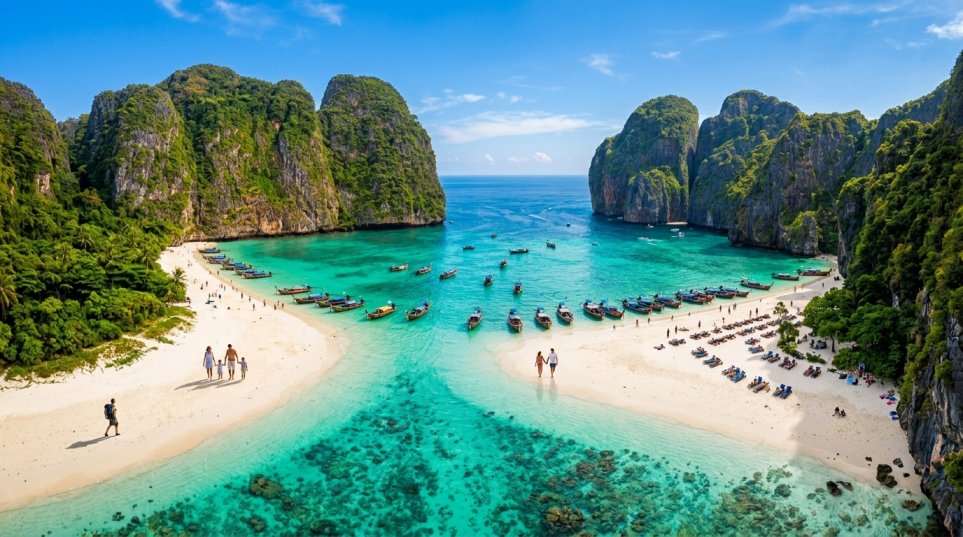
I still remember the first time I stepped off the longtail boat onto the powder-white shore of Koh Lanta and thought: I had no idea Thailand was hiding this. That moment — sandals in hand, warm Andaman water lapping at my ankles, nothing on the horizon but limestone peaks — is why so many travelers return to Thailand year after year.
But here is the honest truth: Thailand has over 1,400 islands, and not every one of them is right for every person. Families need calm waters and safety. Couples want romance and seclusion. Adventure seekers demand reef dives and jungle treks. Backpackers are chasing character and cheap bungalows. One recommendation does not fit all.
This guide is different from the usual lists. Instead of simply ranking islands, we have matched each island to a specific travel personality — so you stop second-guessing and start packing. Whether this is your first trip to Thailand or your fifth, you will leave here knowing exactly which island deserves your time in 2026.
📍 Quick Answer: The best island in Thailand overall is Koh Lanta for balanced travel, Phuket for first-timers, Koh Tao for divers, Koh Samui for families, and Koh Phi Phi for social travelers. Read on for the full breakdown.
1. Phuket — The Best Island in Thailand for First-Time Visitors

If you are visiting Thailand for the very first time and want an island that does everything well, Phuket is your safest and most rewarding starting point. It is the country’s largest island and, frankly, the most developed — which can feel like a drawback until you realise that means world-class hospitals, international food, smooth roads, and a huge range of accommodation from budget guesthouses to five-star resorts.
Why Phuket Works for First-Timers
- Easy direct flights from most Asian hubs and many European cities
- rent personalities — Patong for energy, Kata for families, Surin for elegance
- Organised island-hopping day trips to nearby Phi Phi, James Bond Island, and Phang Nga Bay
- Reliable medical infrastructure and 24-hour pharmacies
- English widely spoken across hotels, restaurants, and markets
Personal note: My parents visited Phuket for the first time in their 60s and were completely at ease. The hardest decision they faced each day was which restaurant to try. That level of comfort is genuinely rare in Southeast Asia.
✈️ Best Time to Visit: November to April offers dry skies and calm seas. The west coast (Patong, Kata) gets rougher from May to October, but the east side stays calmer during monsoon months.
2. Koh Samui — Thailand’s Top Island for Families

Koh Samui sits in the Gulf of Thailand and wears a slightly different personality from the Andaman Sea islands. The water here is warm and consistently gentle, the beaches are long and flat, and the infrastructure has matured beautifully over the past decade without losing its coconut-plantation soul.
Families return to Koh Samui repeatedly because it gets the small details right: shallow-water beaches where children can wade safely, dozens of family-friendly resorts with kids’ clubs, a wide ring road that makes getting around by taxi or scooter easy, and food markets that cater to even the pickiest young eaters.
Top Family Experiences on Koh Samui
- Chaweng Beach — wide, sheltered, and lined with shade umbrellas
- Ang Thong Marine National Park boat tours — a stunning half-day trip suitable for all ages
- Samui Aquarium and Tiger Zoo — popular with younger children
- Maenam Beach — quieter than Chaweng, perfect for toddlers and nap-friendly afternoons
- Cooking classes where kids can make pad thai and mango sticky rice
🏖️ Local Tip: Stay on the north coast near Maenam or Bophut Fisherman’s Village for a quieter, more authentic experience. Chaweng is louder and better suited for teens or adults who want beach-club energy.
3. Koh Phi Phi — The Best Thai Island for Social Travelers and Backpackers

Koh Phi Phi Don is the island that launched a thousand Instagram posts — and for good reason. The twin bays, the limestone cliffs rising straight from the sea, the longtail boats painted in blues and yellows: it is visually staggering. For backpackers and social travelers, nothing in Thailand matches its energy.
What makes Phi Phi particularly compelling is the contrast it offers within a single small island. By day, you snorkel in Maya Bay (now partially restored after a conservation closure), kayak into sea caves, and eat fresh crab at beach shacks. By night, Tonsai Village transforms into a lively strip of fire shows, reggae bars, and rooftop parties where every table eventually becomes one big group.
What to Know Before You Go
- No cars on the island — everything is reached by foot or longtail boat
- Budget bungalows fill fast in high season; book at least 2 weeks ahead
- Day-trippers from Phuket arrive between 11am and 3pm — escape to quieter beaches during this window
- Alcohol bucket culture is real; pace yourself in the heat
- Sunrise over the twin bays from the Phi Phi Viewpoint is not optional — do it
Traveler story: A solo traveler I met in Chiang Mai told me she booked Phi Phi for two nights and ended up staying nine days. ‘I kept making friends at breakfast and we’d plan the next day together,’ she said. That is the Phi Phi effect.
4. Koh Lanta — The Best Island in Thailand for Couples and Slow Travelers

Koh Lanta Yai is the island I recommend most often to couples — particularly those who want romance without the performance of it. There are no rooftop bars blasting EDM, no touts aggressively hawking boat tours. What you get instead is long empty beaches, excellent seafood restaurants with lantern-lit tables, and the kind of silence that lets a conversation breathe.
The island has a gentle, almost literary quality. The Old Town on the eastern coast is a row of century-old Sino-Portuguese shophouses perched over the water, where Muslim fishing families still live the same way their grandparents did. Cycling through it at dusk, when the sea turns gold and the smell of grilled fish drifts from wooden kitchens, is one of my favourite memories from any trip in Southeast Asia.
Why Couples Love Koh Lanta
- Klong Dao and Long Beach offer long, uncrowded stretches with few vendors
- Sunset from Kantiang Bay is arguably the best on any Thai island
- Several boutique eco-resorts cater specifically to couples seeking privacy
- Snorkelling around Koh Rok (day trip from Lanta) rivals the Maldives for colour
- Koh Lanta National Park hiking provides a slower, nature-based adventure
❤️ Honeymoon Tip: Stay at the southern end of the island near Klong Nin or Kantiang Bay for maximum seclusion. These areas have some of the most romantic small-group restaurants in all of Thailand.
5. Koh Tao — Thailand’s Best Island for Divers and Adventure Seekers

Ask any scuba diver which Thai island changed their life and the answer is almost always Koh Tao. This tiny island in the Gulf of Thailand has become one of the most famous dive training destinations on the planet — not because of marketing, but because the diving is genuinely exceptional and the prices for Open Water certification are among the lowest in the world.
The coral gardens at Sail Rock, the whale sharks that drift through Chumphon Pinnacle between March and May, the clear warm water with visibility that regularly exceeds 20 metres — Koh Tao delivers experiences that elsewhere would cost three times as much. Even non-divers find plenty here: the snorkelling at Shark Bay (where you can often spot blacktip reef sharks from the shore) is outstanding, and the hiking trails to the island’s interior viewpoints offer some of the most dramatic coastal panoramas in southern Thailand.
Adventure Options on Koh Tao
- PADI Open Water Diver course — typically 3 days, affordable, world-class instruction
- Night diving at Chumphon Pinnacle — bioluminescent plankton, sleeping sea turtles
- Freediving courses gaining popularity with younger travellers
- Cliff jumping at Sairee Beach northern tip
- Mountain biking across the hilly interior
- Muay Thai training camps for a week-long immersive programme
🤿 Practical Note: March to October is the best period for diving visibility. Avoid Koh Tao during the Gulf’s storm season (October to December) when seas can be unpredictable and some dive sites close.
6. Hidden Islands in Thailand Worth Finding in 2026

Not every traveller wants the well-worn path. If you prefer the version of Thailand that does not appear on every travel blog, these lesser-known islands deserve a serious look.
Koh Yao Noi
Floating between Phuket and Krabi in Phang Nga Bay, Koh Yao Noi is where Thai families go on holiday — not foreign tourists. Village life moves slowly here. Rubber plantations line the interior roads, fishermen mend nets at dawn, and the only sound at night is cicadas. It is genuinely rural Thailand with a remarkable view of limestone karsts in every direction.
Koh Kood (Koh Kut)
Koh Kood sits close to the Cambodian border in the eastern Gulf of Thailand and is everything Koh Chang used to be before development arrived. Untouched jungle, waterfalls you can swim under, and beaches where you can spend an entire day without seeing another footprint. Getting here takes effort — a flight to Trat plus a ferry — but that effort is the entire point.
Koh Kradan
Part of the Hat Chao Mai National Park in Trang province, Koh Kradan has no roads, very few bungalows, and reefs directly off the beach that will make snorkellers weep with happiness. It recently gained attention when it was named one of the world’s best beaches, yet it remains genuinely quiet. Go before the word spreads further.
7. Island Hopping in Thailand: How to Plan It Right

One of the most rewarding ways to experience the best islands in Thailand is to combine several into a single itinerary. Island hopping is both practical and deeply satisfying — each new shoreline offers a completely different mood, ecosystem, and culture.
Classic 10-Day Andaman Island Hop
- Days 1–3: Phuket (arrive, settle, do a day trip to Phi Phi)
- Days 4–6: Koh Lanta (slow travel, kayaking, Koh Rok snorkel day trip)
- Days 7–8: Koh Ngai or Koh Mook (tiny islands in Trang, almost no tourists)
- Days 9–10: Koh Lipe (Thailand’s southernmost backpacker gem, turquoise water)
Classic 10-Day Gulf of Thailand Hop
- Days 1–3: Koh Samui (orient, relax, Ang Thong Marine Park tour)
- Days 4–6: Koh Phangan (more nature-focused than its Full Moon Party reputation suggests)
- Days 7–10: Koh Tao (dive, snorkel, hike, watch sunsets from the viewpoint)
🗺️ Island Hopping Tip: Book ferry tickets at least a few days ahead in high season (December to March). The Lomprayah and Seatran Discovery catamaran services are the most reliable and connect most Gulf islands efficiently.
Frequently Asked Questions
Q. Which island in Thailand is best for first-time visitors?
Phuket is the most practical choice for first-timers. It has the best flight connections, the widest variety of accommodation and food, excellent medical facilities, and easy day trips to nearby islands. If you prefer something smaller and quieter, Koh Samui is a strong second choice.
Q. What is the best time to visit Thai islands?
November to April is the peak dry season for the Andaman coast (Phuket, Krabi, Koh Lanta, Phi Phi). The Gulf of Thailand islands (Koh Samui, Koh Phangan, Koh Tao) have a different weather pattern — their best months run from December to September, with their own stormy season typically in October and November.
Q. Which Thai island is best for couples and honeymoons?
Koh Lanta consistently tops the list for couples who value privacy, natural beauty, and relaxed romance over nightlife. Koh Yao Noi and Koh Kradan are outstanding alternatives for travellers who want genuine seclusion. For luxury honeymoons with more resort options, Koh Samui’s north coast boutique properties are hard to beat.
Q. Are the Thai islands safe for solo female travelers?
Generally yes — Thailand’s major islands are considered safe for solo female travellers. The key precautions are the same as anywhere: trust your instincts, avoid isolated beaches at night, use reputable transport, and keep a list of emergency contacts. Koh Lanta and Koh Samui are particularly welcoming, with a large community of solo female travellers and well-lit, walkable towns.
Q. How do I get between the Thai islands?
The most common method is by ferry or catamaran. Lomprayah operates reliable high-speed services between Gulf islands. Andaman islands are connected via Krabi Tiger Lines and Satun Pakbara services. For longer distances, budget flights on Bangkok Airways (between Samui and Phuket) or AirAsia (to Krabi or Phuket from Bangkok) are efficient and affordable.
Your Thai Island Is Waiting
Thailand does not have a single best island. It has the best island for you — and that depends entirely on who you are, who you are travelling with, and what you genuinely want from your time there.
The Andaman Sea and the Gulf of Thailand between them contain some of the most remarkable tropical landscapes on Earth. Limestone cliffs, bioluminescent bays, coral gardens where sea turtles cruise past your mask, fishing villages that time seems to have forgotten — all of it is accessible, affordable, and genuinely magical.
What I have tried to do in this guide is cut through the noise and give you a direct, honest answer: go to Phuket if you are new, go to Koh Lanta if you need peace, go to Koh Tao if the ocean calls you, and go to Phi Phi if you want the kind of spontaneous adventure that becomes a story you tell for years.
Wherever you land, you will discover something this guide could never fully capture — the particular way light falls on a specific beach at a specific time of day, the smell of lemongrass from a kitchen window, a stranger’s smile across a longtail boat. That is Thailand. Go find your version of it.
📌 Ready to Plan? Bookmark this guide and share it with your travel companion. Use the island profiles above to match your travel style, then check ferry schedules at 12go.asia and accommodation deals on Booking.com or Agoda. Your 2026 Thai island trip starts here.

