
There’s this moment everyone gets—the one where you’re stuck in a lease, staring at a rent notice that makes no sense, and you think: What if somewhere, anywhere, actually wanted me there badly enough to help cover the cost?
Turns out, more places than you’d imagine do. And they’re getting creative about it.
It’s not some underground secret or a scam buried in fine print. Governments across multiple continents are genuinely struggling with the same problem: populations are concentrating in megacities while smaller regions empty out. Schools close. Roads fall apart. Tax bases evaporate. And suddenly, what once seemed like an impossible situation—begging young people to move to your town—becomes a matter of economic survival.
The flip side? Remote work happened. A person can now earn London money while living somewhere the rent costs a quarter as much. That person doesn’t have to stay in London. Someone realized this first, and now governments are racing to recruit them.
What follows is an honest breakdown of actual relocation programs that are currently running, what they actually give you, and the parts the marketing materials conveniently skip over.
The Real Reason Governments Started Offering Money

You need context to understand why this is happening now.
Across much of Europe, the statistics are grim. Parts of Italy have lost 40% of their population since the 1980s. Rural Spain has seen similar collapses. Japan has entire towns declining so fast that municipal governments are disappearing entirely. Meanwhile, Ireland’s Dublin is so crowded that housing costs have jumped past London’s in many neighborhoods.
The math is brutal. A village of 2,000 people supporting a school, a hospital, a municipal center made sense. A village of 400 people trying to maintain the same infrastructure costs four times as much per capita. Eventually, services collapse.
Some regions could’ve accepted this as inevitable decline. Instead, they made a different choice: actively compete for new residents. Think of it as economic triage through recruitment.
Simultaneously, the work-from-anywhere movement gave them an unexpected opening. You can’t easily move a manufacturing plant or a university campus. But you can attract a software engineer who’s currently paying London prices but could comfortably live on half that salary in rural Portugal.
That person just needs two things: a legal visa and a reason to believe they won’t be making a mistake. Relocation incentives are governments’ answer to that second part.
Nine Countries Where This Is Actually Happening (and What You Get)

Southern Italy’s Bet on Its Empty Villages
Italy’s south, particularly regions like Calabria and Sicily, has been bleeding population for decades. Young people graduate, move north to Milan or Rome, and never come back. The comuni—small municipalities—watched their futures vanish.
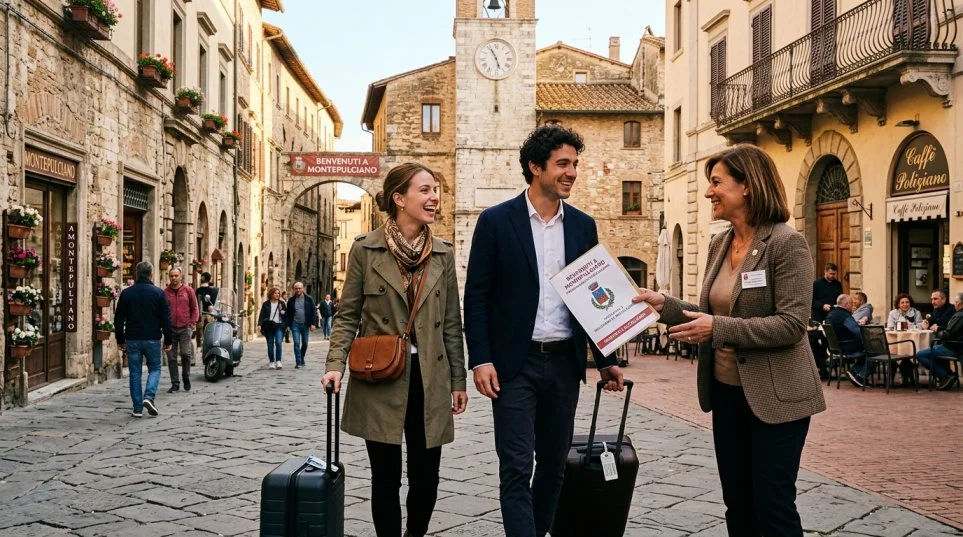
Around fifteen years ago, a few towns started experimenting with something radical: paying people to move in. Today, it’s much more organized. Some municipalities offer up to €28,000 for relocating to villages that meet specific criteria. The catch (because there’s always a catch) is that you’re typically expected to do something productive with your time there. Some programs require you to start a business. Others require renovation work on a property. And almost all require you to stay for at least three years, or you’re returning the money.
Also, and this matters: the money usually doesn’t arrive as a check at your door. It typically comes as reimbursement for renovation expenses. You spend the money first, then provide receipts and documentation, then wait for the bureaucracy to process it. That can take years. This isn’t a get-rich scheme; it’s a get-free-renovations-funded scheme.
But here’s what makes it real: people are actually doing it. Entire network communities have formed on Reddit and Facebook of Italophiles who’ve successfully navigated this, renovated homes in places like Piedmont and Sicily, and built lives there. The homes are genuinely cheap. The weather is genuinely beautiful. The food is genuinely incredible.

Portugal’s Playbook for Attracting Remote Workers
Portugal could’ve rested on its reputation. It’s one of the safest countries in Europe, the food is underrated, the Atlantic coastline is spectacular, and housing is still affordable by Western European standards.
Instead, the Portuguese government actively designed a system to attract remote professionals. The D8 Digital Nomad Visa exists specifically for people who work remotely for foreign companies. You need around €1,200 per month to qualify (their definition of living wage), and in exchange, you get a legal one-year visa that’s extendable up to five years. It’s one of the clearest, most English-friendly visa pathways anywhere.
On top of that, Portugal still runs its Non-Habitual Resident program, though reformed in 2024. The original version was famous for its 10-year tax break; the new version targets specific professions and offers more limited benefits, but it’s still available for certain categories of professionals.
The combination—a straightforward visa that welcomes remote work, plus potential tax advantages—has made Lisbon and Porto magnets for digital workers. The infrastructure works. The bureaucracy, by Southern European standards, actually functions. And Lisbon’s coffee culture, while admittedly a bit hipster these days, genuinely delivers.
Portugal isn’t paying you to move in the direct-cash sense. But they’re making it so legally simple and tax-efficient that the financial incentive is built into the system. Which is, arguably, smarter than just cutting a check.

Greece’s Unusual Tax Break for Investors
Greece has a program that targets a different demographic entirely: people with money. New residents who establish a permanent tax residency in Greece get a 50% reduction on income tax for seven years. The catch: you need to invest at least €500,000 in Greek real estate, securities, or a Greek business. This isn’t a program for bootstrappers or regular digital nomads. It’s explicitly for people who have serious capital.
That said, if you’re that person, the math is interesting. Greek property is still, in many regions, less expensive than Western European equivalents. The seven-year tax break applies to Greek-source income—so if you have rental income from Greek properties, a Greek business, or investment returns generated there, you get taxed at half rates.
Athens has actually undergone genuine transformation in the last decade. The neighborhoods around Gazi and Psyrri, which were nearly abandoned in the 2010s, are now thriving creative hubs. The food scene has caught up to what it should’ve been all along.

Japan’s Quiet Experiment With Free Houses
Japan faces a demographic challenge so severe that it’s not even hidden anymore. The country is aging faster than any developed nation, and rural areas are being abandoned at alarming rates. There are nearly 9 million abandoned houses in Japan right now—actual empty homes in a country where housing is expensive.
The response has been creative. Local governments across rural prefectures started registering these vacant properties—akiya—and offering them to anyone willing to move in and restore them. Some towns give them away for literally ¥0. Others offer a small sum. And then, a subset of municipalities adds living subsidies on top: ¥50,000 to ¥100,000 per month (around $330–$660 USD) for people who relocate to designated depopulation zones.
One important note: almost all of this information exists only in Japanese. If you don’t read Japanese, this is significantly harder to navigate. But there are English-language communities—particularly on Reddit’s r/japanlife and various Discord servers—where people have basically translated the landscape and can walk you through the process.
The houses themselves are frequently in real structural condition issues. You’re not getting a turnkey home; you’re getting a building that’s been empty for fifteen years. But renovation costs in rural Japan are low. And if a municipality is subsidizing your living costs while you work on it? The economics change dramatically.
Some digital nomads and remote workers have genuinely built lives this way. Small mountain towns in places like Nagano, Toyama, and Gifu are quietly becoming hubs for international residents. The culture gap is real, and the language barrier is genuine, but the financial opportunity is legitimately compelling.

Canada’s Practical Path to Residency
Canada’s Atlantic Immigration Program exists for a straightforward reason: Atlantic Canada (Nova Scotia, Newfoundland, New Brunswick, Prince Edward Island) has been losing people for twenty years, and the provinces decided to stop accepting that.
The program targets skilled workers in high-demand fields—healthcare, technology, trades. Sponsors (employers or provincial organizations) can nominate foreign workers who can then obtain permanent residency. Various settlements throw in relocation grants around CAD $2,000–$3,000, and some offer additional supports for families.
This is less ‘free money to move’ and more ‘fast-track permanent residency plus some funding help.’ But that’s actually more valuable. Permanent residency in Canada opens doors that a temporary visa doesn’t.
The catch is that you need to be in a field that’s in demand, and you typically need a job offer or sponsorship lined up before the process moves forward. It’s not a program for people who want to figure things out after they arrive.

Ireland’s Serious Money for Rural Renovation
Ireland’s approach is unusually generous. The Vacant Property Refurbishment Grant program offers up to €84,000 for refurbishing a derelict or vacant property in Ireland. The catch is exactly what you’d expect: you have to buy or own the property first, and you have to actually do the refurbishment. The grant reimburses you for verified, eligible costs.
This is how it actually works: you find a neglected property in a rural area. You buy it (or it’s a family property). You get detailed quotes for the renovation work. You submit those to the local authority. You do the work. You provide receipts. Then the grant process reimburses you up to the €84,000 cap.
It’s not fast. Irish bureaucracy, for all its charm, moves at a contemplative pace. But the money is real, the process is documented, and the outcome is that rural Irish properties become financially viable for foreign buyers in a way they wouldn’t be otherwise.
Combined with Ireland’s strong English-speaking culture (obviously) and its access to EU markets and networks, it’s become attractive to people who can work remotely. A renovated cottage in Cork or Galway, funded partially by a government grant? That’s actually a viable scenario now.

Spain’s Flat Tax Rate for Newcomers
Spain introduced its Special Expatriate Tax Regime, casually known as the Beckham Law (seriously, that’s what it’s called everywhere), in the 1990s as a way to attract high-earning professionals.
New Spanish residents who qualify can pay a flat 24% tax on Spanish-source income for up to six years, rather than the progressive rates that go up to 47%. Additionally, foreign income is often excludable from Spanish taxation.
To qualify, you can’t have been a Spanish tax resident in the previous ten years, and you typically need to be taking up work or an entrepreneurial activity in Spain. But if you’re a consultant, a business owner, or someone with significant foreign income, the math is compelling.
Lisbon gets most of the digital nomad attention, but Barcelona, Valencia, and Seville have been quietly attracting international professionals through various local initiatives and the national tax regime. Seville especially has been developing a startup scene.

Netherlands’ Employer-Sponsored Advantage
The Netherlands has the 30% ruling—a partial tax exemption for qualifying expat employees. Here’s how it works: if a Dutch employer hires you as an expat and you meet certain conditions (primarily, you didn’t live in the Netherlands in the four years before), you can receive up to 30% of your gross salary as a tax-free cost-of-living allowance for five years. This gets applied at tax time, effectively reducing your taxable income.
This wasn’t designed as an immigration recruitment tool, but it functions as one. The result is that Amsterdam, The Hague, Rotterdam, and other major cities have thriving English-speaking expat communities. The infrastructure is excellent. English is genuinely the second language of business. And the tax benefit makes relocation more affordable.
The catch is that you need a Dutch employer to sponsor it. You can’t use it if you’re self-employed or freelance (though the Netherlands has been experimenting with that). But for people getting recruited by Dutch companies or EU-based companies with Dutch offices, it’s a genuine financial advantage.

Barbados’ Offer for People Who Work Remotely
Barbados wasn’t the first to offer a digital nomad visa, but it was one of the first to nail the execution. The Welcome Stamp visa costs USD $2,000 per person, valid for one year and renewable for additional years. In exchange, you get legal residency plus immunity from Barbadian income tax on foreign-earned income. You can work remotely for clients or employers anywhere in the world, and your income remains untaxed.
Combine that with Caribbean sunshine, beaches, and improving internet infrastructure, and you have something appealing. This is less ‘we’re paying you money’ and more ‘we’re creating a legal structure where you keep more of your money.’ But if you’re earning a decent remote income, the tax savings on $2,000 entry can pay for themselves within months.
The island has developed genuine infrastructure to support this—co-working spaces, restaurants catering to a growing expat community, reliable electricity and internet in main towns. It’s not a raw experience; it’s a functional relocation with obvious benefits.

Estonia’s Digital Advantage Play
Estonia doesn’t hand out cash. What they offer is something that functions as currency for digital professionals: a sophisticated, fully digital bureaucracy and a pathway to running an EU-registered business.
The Estonian Digital Nomad Visa allows remote workers to live in Estonia for up to one year while working for non-Estonian clients. Straightforward to apply for, relatively affordable.
Where it gets interesting is the e-Residency program. You can digitally incorporate an EU-registered company and run it entirely online. The corporation pays 0% tax on retained profits—you only pay tax on dividends you withdraw. Combined with Estonia’s fully digital business ecosystem, this is essentially a financial engineering tool that also happens to come with residency.
For digital entrepreneurs and serious remote workers, Estonia offers something deeper than just ‘come live here.’ It offers a platform to structure your business tax-efficiently while being physically located in one of Europe’s most technologically advanced countries.
Tallinn is genuinely beautiful, and the cultural overlap with Scandinavian culture means that safety, infrastructure, and everyday function are all excellent.
What Actually Matters: The Non-Advertised Parts
Here’s the part that infomercials don’t cover. Every single one of these programs is real. That’s important to know. But every single one has dimensions that require actual thought before you sign up.
Minimum stay requirements are standard. Italian village grants, Japanese akiya programs, Irish renovation support—they almost always require you to live there for a defined period. Leave early, and you’re either paying back the money or losing benefits retroactively. Plan accordingly.
Language matters more than you think. Most of these programs have their deepest information in the local language. Even EU countries that use English in business don’t necessarily use it for bureaucratic documentation. If you don’t speak Italian, you’re hiring someone who does. If you don’t speak Japanese, you’re depending on community translation guides. Factor that into costs.
Tax treaties are convoluted. Being ‘tax-free’ in Portugal doesn’t mean the U.S. government forgets you exist. American citizens are taxed on worldwide income. Canadian citizens have similar requirements. Australian citizens dealing with foreign investment income face complex rules. Talk to a tax professional who understands cross-border situations. Seriously.
Properties that are free or nearly free are usually free for a reason. Structural problems, isolated locations, or communities that are genuinely difficult to live in sometimes underlie the easy terms. Visit before committing.
Healthcare and family considerations need serious thought. If you’re moving alone or as a couple, many of these rural programs are genuinely viable. If you have kids, are elderly, or have ongoing health needs, a remote mountain village in Japan might be beautiful but problematic for emergency medical care. Think about your actual life situation, not just the financial benefit.
Visa restrictions are real. Some of these programs give you residency but not the right to work for local employers. Others give you work visas but restrict business creation. Some are explicitly temporary. Understand exactly what permission you have.

The Frequently Overlooked Questions
Q. Do I owe taxes on this money in my home country?
Usually not, if it’s structured as a grant or reimbursement for specific costs. But ‘usually’ isn’t good enough when taxes are involved. Hire an accountant for an hour and get a proper answer for your specific situation.
Q. Can I just take the money and leave?
Not if the program requires a minimum stay, and most do. You’d be in breach of contract, possibly facing clawback of funds or legal action.
Q. What if the market crashes or the area gets worse?
You’re locked in, at least for the minimum period. If you committed to a three-year stay and you hate it after six months, you’re still there. This is why visiting first—spending time in the actual location, in different seasons if possible—is critical.
Q. Is this actually easier than just immigrating normally?
Sometimes yes, sometimes no. It depends on your situation. For skilled workers, Canada’s regular immigration streams might be faster than waiting for a village grant. For a person with capital, creating residency in Greece might be more straightforward than going through these programs. These incentive programs aren’t automatically the easiest path; they’re just one option.
Q. What if the program changes while I’m in it?
It happens. Government programs get revised, rules change, politicians change their minds. Once you’re committed and relocated, you have less negotiating power. This is another reason to read the actual program documents and understand what parts of the agreement are legally binding versus what parts are administrative policy.
The Real Opportunity
We’re genuinely in a moment where the power dynamics around relocation have flipped. For most of history, people who wanted to move internationally had to convince a country to let them in. Governments were skeptical; immigration control was the default.
Right now, in pockets around the world, governments are the ones trying to convince people to come. That’s a different situation entirely.
The programs listed above are the legitimate, currently-operating tools for taking advantage of that moment. They’re not perfect. They require research, often involve bureaucracy, and come with genuine strings attached. But they represent real opportunities that didn’t exist a decade ago.
If you’ve been thinking about relocation, these aren’t daydreams anymore. They’re specific, documented pathways. What changes the equation is whether your life situation aligns with what one of them is actually offering.
The person thinking about rural Italy probably isn’t the same person drawn to Barbados’s beaches. The digital entrepreneur interested in Estonia’s e-Residency probably isn’t considering Japan’s akiya renovation program. The investor comfortable with Greece’s €500K entry point isn’t the same profile as the Canadian healthcare worker attracted to Atlantic Canada’s permanent residency path.
Start by honestly evaluating what matters to you: climate, language, culture, cost, visa timeline, family situation, career goals. Then look at which programs actually fit that reality. The ones that do? Those are worth the deeper research.
The relocation incentive industry is real, and it’s expanding. The only question is whether it’s real for you, specifically, right now.

