
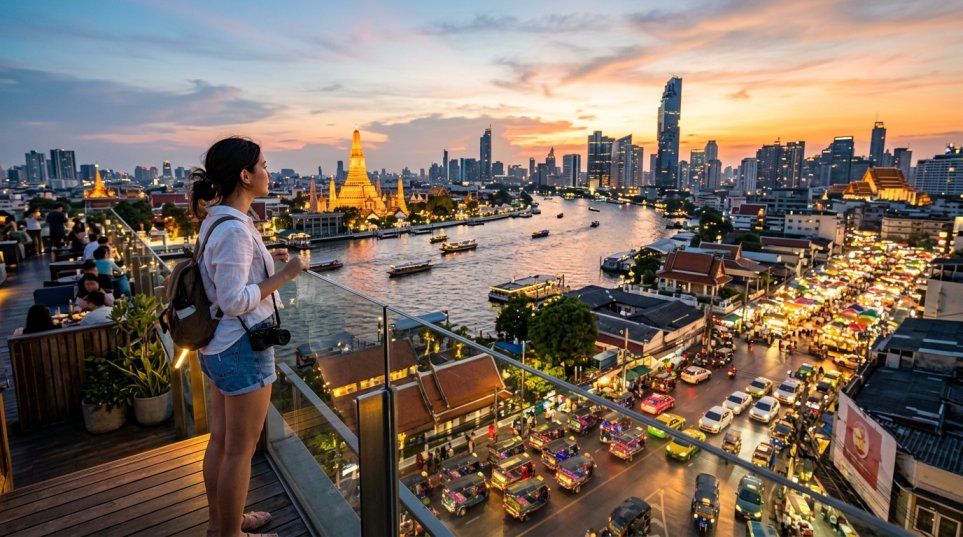
Why Bangkok Always Catches You Off Guard
I remember stepping out of Suvarnabhumi Airport for the first time and thinking, “Okay, I was not ready for this.” The heat hit me like a warm towel, the tuk-tuks were honking in three different languages, and a street vendor was selling mango sticky rice ten meters from the taxi stand. That was my welcome to Bangkok — and honestly, it was perfect.
Bangkok is one of those rare cities that never lets you settle into a single mood. It’s chaotic and serene, ancient and ultramodern, budget-friendly and luxury-rich — sometimes all on the same street. If this is your first time visiting, you’re in for something special. But preparation makes the difference between a trip that’s merely good and one that completely rewires how you think about travel.
This complete guide to Bangkok for first timers walks you through everything: where to stay, what to eat, how to get around, what to do, and how to spend your money wisely. Let’s get into it.
Best Time to Visit Bangkok-Picking Your Window Wisely

Thailand has three seasons, and timing your Bangkok visit correctly can save you from misery — or deliver you straight into it.
The Cool Season (November to February) — The Sweet Spot
This is widely considered the best time to visit Bangkok. Temperatures hover between 25–30°C, the skies are mostly clear, and outdoor sightseeing doesn’t feel like a punishment. Every major festival, including Loy Krathong (November) and New Year celebrations, falls in this window. If you can only go once, go now.
The Hot Season (March to May) — Survivable with Strategy
Temperatures climb to 35–40°C, and humidity makes it feel worse. That said, Songkran — the famous Thai New Year water festival in mid-April — is one of the most joyful street parties you’ll ever witness. If Songkran is on your list, come prepared with waterproof bags for your electronics.
The Rainy Season (June to October) — Underrated and Affordable
Short, heavy afternoon showers are the norm, not all-day downpours. Crowds thin out, hotel prices drop significantly, and the city feels more local. If you don’t mind a daily 30-minute rain sprint, you can experience Bangkok for 30–40% less than peak season.
Pro tip: Regardless of when you visit, pack light breathable clothes and at least one compact umbrella. Bangkok’s weather doesn’t negotiate.
Bangkok Transportation Guide-Getting Around Without Getting Lost
Bangkok’s traffic is legendary — and not in a good way. But the city has invested heavily in its public transport network, and if you know the system, you can avoid the gridlock entirely.
BTS Skytrain & MRT Subway
These two elevated and underground rail systems are your best friends. The BTS Skytrain covers popular tourist areas like Sukhumvit, Siam, and Silom. The MRT subway connects major spots including Chatuchak Market and Lumphini Park. A single journey costs around 17–59 THB (₹40–₹145 / $0.50–$1.70), and the two networks share interchange stations.
Buy a Rabbit Card (for BTS) or MRT stored-value card — they make hopping between stations seamless and save small amounts on each trip.
Tuk-Tuks and Motorbike Taxis

Tuk-tuks are iconic and genuinely fun for short hops, but always negotiate the fare before you get in. A reasonable rate for a 10-minute ride is 80–150 THB. Motorbike taxis (the riders in colored vests) are faster for dodging traffic but riskier — use them for short distances only.
Chao Phraya Express Boat
Don’t underestimate Bangkok’s river ferry system. The orange-flag boats running along the Chao Phraya River are cheap (15–40 THB per trip), scenic, and connect several important temples and riverside neighborhoods. It’s also one of the most genuinely Bangkok experiences you can have.
Grab (Ride-Hailing App)
Download Grab before landing. It works like Uber, shows you fixed fares upfront, and eliminates the need to bargain. Essential for late nights or areas not covered by the rail system.
Where to Stay in Bangkok-Neighborhoods for Every Type of Traveler
Bangkok’s neighborhoods each have a distinct personality. Where you stay shapes your entire experience.
Sukhumvit — Best for Nightlife & Convenience
If you want easy BTS access, international restaurants, rooftop bars, and Bangkok’s famous nightlife scene, Sukhumvit is your base. Areas like Nana (BTS Nana) and Thong Lo (BTS Thong Lo) are particularly popular. Budget options exist, but this area skews mid-range and upscale.
Silom / Bangrak — Best for Business & Mixed Crowds
Home to the famous Patpong Night Market and connected to Lumpini Park, Silom blends business travelers and tourists smoothly. Great food scene and reliable BTS connectivity.
Khaosan Road — Best for Backpackers & First Timers on a Budget
The legendary backpacker hub. Guesthouses start from $10/night, street food is everywhere, and you’ll meet travelers from every corner of the world. It’s loud, lively, and close to the Grand Palace. Not for everyone, but genuinely memorable.
Riverside / Charoen Krung — Best for Atmosphere & Luxury
If budget allows, the Chao Phraya riverside area offers some of Bangkok’s most beautiful hotels (Mandarin Oriental, Peninsula Bangkok) and a slower, more contemplative side of the city. Also home to an emerging arts and café scene in Charoen Krung.
Budget Range Guide:
- Backpacker (dorms/guesthouses): $8–$25/night
- Mid-range hotels: $40–$90/night
- Boutique/Luxury: $100–$350+/night
Bangkok Temples-The Spiritual Heart of the City

You cannot visit Bangkok without spending meaningful time at its temples. These aren’t just tourist checkboxes — they are living, breathing spaces of devotion that have shaped this city for centuries.
Wat Phra Kaew & the Grand Palace — Start Here
This is Bangkok’s most visited landmark for good reason. The Grand Palace complex houses Wat Phra Kaew, home to the sacred Emerald Buddha. Entry costs 500 THB (~$14), and dress code is strictly enforced — cover shoulders and knees. Go early morning (opens 8:30 AM) to beat the crowds.
Wat Pho — Home of the Reclining Buddha
A five-minute walk from the Grand Palace, Wat Pho shelters the stunning 46-meter-long gilded Reclining Buddha. The temple complex also houses Thailand’s oldest traditional massage school — you can book a proper Thai massage here for 420 THB/hour. Worth every baht.
Wat Arun — The Temple of Dawn
Across the Chao Phraya River (short ferry ride from Wat Pho), Wat Arun is most beautiful at sunrise and sunset. The porcelain-tiled spires catch the light in a way that photographs simply cannot replicate. Climb the central prang for sweeping river views.
Wat Saket (Golden Mount) — The Overlooked Gem
Fewer crowds, same spiritual weight. Climb the spiral staircase to the golden chedi at the top for 360-degree views over Bangkok’s rooftops. Entry is just 20 THB. This is where I’d send any friend who wants something quieter and more contemplative.
Temple Etiquette: Remove shoes before entering, dress modestly (scarves available for rent at major temples), speak quietly, and never point your feet toward Buddha images.
Bangkok Street Food-A Complete Eating Guide
Forget the restaurants for your first 48 hours. Bangkok’s street food scene is among the finest in the world, and the best experiences cost under $3.
Must-Try Dishes
- Pad Thai — Stir-fried rice noodles with egg, bean sprouts, and your choice of protein. The versions served from small street carts often beat the restaurant versions.
- Som Tum (Green Papaya Salad) — Spicy, sour, fresh, and intensely flavored. Ask for “mai phet” (not spicy) if you’re new to Thai heat levels.
- Boat Noodles — Served in tiny portions, deeply spiced pork or beef broth noodles originally sold from canal boats. Concentrated flavor in a small bowl.
- Mango Sticky Rice — The dessert that redefines what dessert can be. Sweet coconut-milk rice with fresh ripe mango. Best from April to June when mangoes peak.
- Grilled Pork Skewers (Moo Ping) — Breakfast staple. Marinated pork grilled over charcoal, served with glutinous rice. Costs 10–15 THB per skewer.
Best Street Food Areas
- Yaowarat (Chinatown) — Bangkok’s most intense food street. Best visited after dark when the stalls fully open. Try oyster omelettes, roast duck, and dim sum.
- Sukhumvit Soi 38 Night Market area — Though reduced from its former glory, the nearby street stalls around On Nut and Phra Khanong still deliver excellent affordable food.
- Or Tor Kor Market — Less touristy than most markets, more Thai locals, and extraordinary fresh and prepared food quality.
Food Safety Tip: Look for high-turnover stalls — the ones with a queue. Fresh ingredients cooked in front of you on a hot wok is generally very safe. Avoid stalls where food has been sitting out.
Things to Do in Bangkok Beyond the Classics

Bangkok rewards the curious traveler who ventures past the standard itinerary.
Visit Chatuchak Weekend Market
The world’s largest weekend market runs every Saturday and Sunday. Over 15,000 stalls sell everything from vintage clothes and handmade crafts to live plants and street food. Go early (before 11 AM) before the heat peaks. Budget 3–4 hours minimum.
Experience Bangkok Nightlife
Bangkok after dark is a world unto itself. Rooftop bars like Vertigo at Banyan Tree or Sky Bar at Lebua (made famous by The Hangover Part II) offer cocktails with city views. For something more local and buzzing, the RCA (Royal City Avenue) club strip or the craft beer bars of Thonglor serve a mostly Thai crowd with great energy.
Take a Floating Market Day Trip
Damnoen Saduak or Amphawa floating markets (1–2 hours from Bangkok) give a glimpse of Thailand’s canal-based trading culture. Amphawa is the more atmospheric and less commercially staged of the two.
Explore the Jim Thompson House
A beautifully preserved collection of traditional Thai houses belonging to Jim Thompson, the American businessman who revived Thailand’s silk industry. The 1-hour guided tour is genuinely fascinating — half art history, half mystery story.
Bangkok Shopping Guide-From Malls to Markets
Bangkok is one of Asia’s great shopping cities. Here’s where to spend your money:
- MBK Center — Budget electronics, knock-off goods (openly sold), phone accessories, and cheap tailoring. Chaotic and fun.
- Siam Paragon & CentralWorld — International brands, Thai designer labels, and massive food halls. Air-conditioned retail therapy.
- Platinum Fashion Mall — Wholesale clothing at retail prices. Ideal for buying Thai-style clothes in bulk.
- Asiatique the Riverfront — Open-air riverside night market with a ferris wheel, decent food, and a pleasant mix of crafts and clothing.
Bargaining Etiquette: Bargain at markets, never in malls. Start at roughly 50–60% of the asking price and meet somewhere in the middle. Keep it friendly — it’s a social exchange, not a confrontation.
Bangkok Budget Travel-What to Expect to Spend

Bangkok can be done cheaply or expensively — you genuinely choose your own adventure.
| Category | Budget Traveler | Mid-Range | Comfort/Luxury |
|---|---|---|---|
| Accommodation | $10–$25/night | $45–$90/night | $100–$300+/night |
| Food (daily) | $8–$15 | $20–$40 | $50–$100+ |
| Transport | $3–$6 | $8–$15 | $20–$50 |
| Activities | $10–$20 | $30–$60 | $80–$200+ |
| Daily Total | ~$30–$60 | ~$100–$200 | $250+ |
Bangkok Travel Tips-12 Things Every First Timer Should Know
- Download Google Translate with Thai language offline — menus and street signs will become readable.
- Carry cash (Thai Baht) — many street stalls and smaller shops don’t accept cards. ATMs are everywhere but charge 200–220 THB per foreign withdrawal.
- Never accept “closed today” from strangers near temples — this is a common scam leading you to unwanted gem or tailor shops.
- The Thai smile is genuine but also a social tool — stay calm in frustrating situations; raising your voice achieves nothing here.
- Respect the monarchy — criticizing the Thai royal family is illegal and can lead to serious consequences. Simply don’t.
- Wai (the Thai greeting) — hands pressed together, slight bow. Locals appreciate when visitors make the effort.
- Sunscreen is non-negotiable. Bangkok’s equatorial sun is intense even on cloudy days.
- A 7-Eleven is never more than 300 meters away. They’re genuinely useful for cheap snacks, SIM cards, ATMs, and emergency rain ponchos.
- Buy a local SIM at the airport. AIS or DTAC offer tourist SIMs from 299 THB with generous data. Worth every baht.
- Don’t touch anyone’s head — it’s considered sacred in Thai culture.
- Haggling for tuk-tuks: Quote a number first, never ask “how much?” — it anchors the conversation in your favor.
- Try to learn three Thai words: Sawasdee krap/ka (hello), Khob khun krap/ka (thank you), Aroy mak (very delicious). The warmth you receive in return is immediate.
Sample Bangkok Itinerary-4 Days for First Timers

Day 1: The Historic Heart
Morning at Wat Phra Kaew and Grand Palace → Lunch at a riverside restaurant → Wat Pho and Thai massage → Sunset ferry to Wat Arun → Dinner in Chinatown (Yaowarat)
Day 2: Culture & Local Life
Morning at Or Tor Kor Market → Jim Thompson House → Afternoon at MBK or Siam Paragon → Evening rooftop bar experience
Day 3: Modern Bangkok & Nightlife
Chatuchak Weekend Market (if Sat/Sun) → Lumphini Park walk → Afternoon rest → Bangkok nightlife exploration (Thonglor or Silom)
Day 4: Day Trip & Departure Prep
Floating market day trip → Return for final street food tour → Shopping for souvenirs at Asiatique → Depart
Frequently Asked Questions (FAQ)
Q: Is Bangkok safe for solo travelers?
Bangkok is generally very safe, including for solo women travelers. The main risks are petty theft, scams targeting tourists (gem scams, tuk-tuk detours), and traffic. Use common sense, don’t flash valuables, and you’ll be fine. Most locals are genuinely helpful and welcoming.
Q: How many days do I need in Bangkok?
Three to four days gives you a solid first experience covering the major temples, street food, markets, and a taste of nightlife. Five to seven days allows you to slow down, take day trips (Ayutthaya, Kanchanaburi), and explore neighborhoods at your own pace.
Q: Do I need a visa for Thailand?
Citizens of many countries including India, the US, UK, EU nations, and Australia can enter Thailand visa-free for 30–60 days (policies updated in 2024 — always verify with the Royal Thai Embassy before travel). A valid passport with 6 months’ validity is required.
Q: What is the currency in Bangkok and how do I get it?
Thai Baht (THB). The best rates are usually from airport exchange counters on arrival or from in-city exchange booths (SuperRich and Vasu Exchange offer competitive rates). Avoid exchanging at hotels — their rates are poor. Airport ATMs work but charge foreign transaction fees.
Q: Is Bangkok expensive?
Bangkok is one of the most affordable major cities in Asia for travelers. A budget traveler can live well on $35–$50/day, eating street food and using public transport. Mid-range travelers spending $80–$150/day can enjoy solid hotels, nicer restaurants, and paid attractions comfortably.
Bangkok Rewards Those Who Arrive Curious
Bangkok doesn’t hand you its best side immediately. The first day can be overwhelming — the heat, the traffic, the sensory overload. But around day two, something shifts. You find your rhythm. You discover the little canal-side coffee shop. You stumble into a temple ceremony no guidebook mentioned. You eat the best bowl of noodles of your life standing at a cart under a flyover.
That’s what Bangkok does. It rewards curiosity, patience, and a willingness to wander without a rigid plan.
Use this guide as your foundation, but leave room for the unexpected. The city’s best moments aren’t scheduled — they find you when you’re paying attention.
Ready to book your Bangkok trip? Start by checking flights, comparing accommodation in your chosen neighborhood, and downloading Grab and Google Translate before you land. The rest, Bangkok will take care of.

