
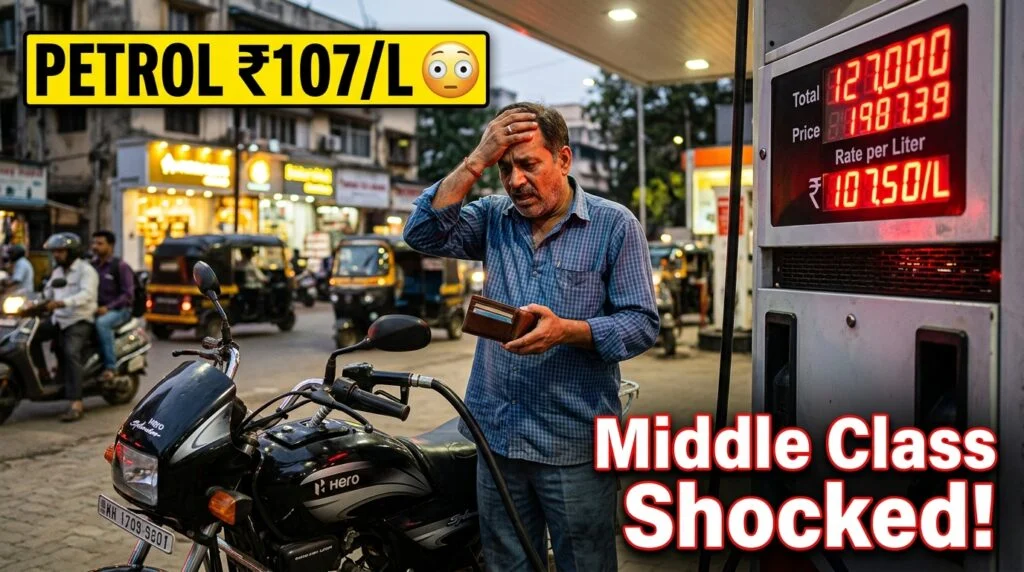
The Day I Stopped Arguing With the Petrol Pump
There is a specific kind of silence that falls inside a car right after you see the fuel bill.
Not the peaceful kind. The kind where you stare at the receipt, blink twice, and quietly wonder if you can start cycling to work at age 34. You do the math in your head — how many times this month, how many kilometres, how much is left in the account — and somewhere between the calculation and the exhale, you reach for your phone and start typing something sarcastic on WhatsApp.
That’s the moment this article was born.
I’m not an economist. I’m not a policy expert. I’m just someone who fills up a tank, feels the pinch, and needed a place to put all these feelings — along with a solid list of petrol price hike quotes for every mood, platform, and level of frustration.
Whether you want something funny, something that actually stings, or something surprisingly deep about fuel price increase and what it does to ordinary lives — this is that list. Stick around. There’s a lot here.

Why Petrol Prices Hurt Differently in India
Before the quotes, let me spend just a minute being honest about why this hurts more than it seems like it should.
India is not a rich country on average. The median Indian household earns somewhere between ₹15,000 and ₹25,000 a month. For that household, a tank of petrol — if they’re lucky enough to own a two-wheeler — costs between ₹800 and ₹1,200 every 10 to 15 days. Do the math. That’s almost 10% of monthly income just to move around.
And it’s not just the tank. Rising petrol prices set off a chain of events that most people feel but rarely connect back to the source.
Here’s what actually happens when petrol rates in India go up:
- The vegetable seller pays more to bring produce from the farm
- The auto-rickshaw driver raises fares to survive
- The Swiggy delivery guy makes fewer trips per hour
- The school van operator sends a revised fee note home
- Your monthly grocery bill goes up ₹200–400 for no visible reason
This is what economists call fuel inflation — and it is, in the most literal sense, inflation that you breathe every single day without realising the source.
Now add to this the fact that India imports roughly 85 paise of every rupee worth of oil it consumes. Every time crude oil prices spike globally — a war here, an OPEC meeting there, a hurricane in the Gulf of Mexico — India’s fuel bill rises automatically. We have almost no buffer.
I say all this not to depress you, but because the best quotes — the ones that really land — come from understanding the thing you’re commenting on. So now that we’re on the same page, let’s get into it.
80+ Original Petrol Price Hike Quotes, Captions & Status Lines
I’ve split these by mood because different days call for different energy. Scroll to wherever you are right now.

😂 Funny & Sarcastic — When Laughing Is the Only Coping Mechanism
These are for the days when you just need to post something and move on.
“Petrol bhi mehnga, dil bhi toot gaya — and I haven’t even started the engine yet.”
“I told my car I loved it. It said, ‘Prove it — fill the tank.’ I said goodbye.”
“My financial advisor says to cut unnecessary expenses. My car disagrees.”
“The petrol pump attendant now greets me by name. That’s how often I come here to cry.”
“Petrol price today: Enough to make you reconsider your entire life’s geography.”
“My bike gets 45 km per litre. Unfortunately, my salary also gets 45 km per month.”
“I asked for full tank. He asked if I was sure. I appreciated the concern.”
“Filling petrol used to feel like self-care. Now it feels like self-destruction.”
“Rising petrol prices have given me something no gym ever could — the daily motivation to walk.”
“They say money can’t buy happiness. Correct. But it could buy petrol, which was the next best thing.”
“My car’s running on fumes. My bank account understood the assignment.”
“I’m not broke. I just donated my savings to the petroleum ministry voluntarily.”
“Petrol hike announced. I immediately Googled: ‘how to train a horse in a city.'”
“Four wheels move the body. Two wheels move the soul. Rising fuel costs move everything to the footpath.”
“Every oil price surge internationally is just a newsletter to my wallet saying: less this month.”
“My car asked what’s for dinner. I said petrol. It said, ‘not again.'”
“The only thing going up faster than petrol prices is my anxiety at the fuel station.”
“Petrol pump ne phir lutaya. Koi nahi, ghar se office tak toh pair hain hi.”
“Petrol today: ₹103. My will to live after filling up: ₹2 remaining.”
“I now calculate distance in rupees. ‘That shop is ₹18 away from here.'”

😤 Savage & Sharp — For When You’re Actually Angry
These are for Twitter/X when you want to make a point without being ignored.
“Petrol price hike every quarter. Salary hike: once in a blue moon, if you beg. Normal country.”
“We are taxed to fill our tanks and taxed again when everything the truck delivers gets expensive. Double taxation, full silence.”
“The impact of petrol price hike on common people: Real. The government’s urgency to fix it: Optional.”
“Nothing unites India faster than a petrol price hike. Caste, religion, language — all forgotten. We are all just people crying at the pump.”
“They cut subsidies, raised excise duty, and then expressed concern about inflation. The audacity has its own fuel efficiency.”
“Diesel price hike means the truck driver earns less, the food costs more, the poor eat less. It’s not complicated — it’s just inconvenient to say out loud.”
“We debate politics endlessly. Meanwhile, the petrol price quietly increased nine times this year and everyone nodded and drove away.”
“Fuel inflation is the tax that even tax evaders can’t escape. Everyone pays. No receipt. No refund.”
“The rich man fills his SUV and doesn’t notice. The poor man fills his two-wheeler and skips lunch. Same pump, different realities.”
“I’m not anti-government. I’m anti-paying ₹35 in taxes for every litre of petrol while being told austerity is for the people.”

💔 Emotional & Relatable — For When It’s More Than Just Money
These are the ones that go deeper. The ones people share quietly.
“It’s not the ₹5 increase that breaks you. It’s the quiet recalculation of everything that follows — the trip you skip, the relative you don’t visit, the outing you don’t take the kids on.”
“Rising petrol prices remind me that the economy is not something that happens in Delhi or Mumbai. It happens in my morning commute, my vegetable bill, my daughter’s school van fee.”
“Some days I think about the daily wage labourer who earns ₹400 and spends ₹80 on the bus fare that went up because the bus runs on diesel that got more expensive. And I stop complaining about my tank.”
“Fuel inflation is invisible until it’s everywhere — in the auto fare, the delivery charge, the corner store price hike, the sabzi that costs a rupee more. Then suddenly, it’s all you can see.”
“Every time there’s an oil price surge, a family somewhere in India quietly adjusts their weekend plans. Not dramatically. Just a small, silent subtraction from their joy.”
“The saddest thing about petrol rates in India is that those who can least afford the hike are the ones who have no alternative to fuel-dependent transport.”
“I used to think the petrol pump was just a stop on my way somewhere. Now I realise it is the place where many people’s plans quietly die.”
“The transportation cost increase is never just about money. It is about distance. About how far from each other a few extra rupees can push people.”
“My grandfather walked 8 km to school. I thought we had progressed past that. Petrol prices are slowly walking us back.”
“When fuel gets expensive, the city doesn’t change. But your version of the city shrinks — fewer places you go, fewer people you see, smaller and smaller circles.”

💡 Thoughtful & Motivational — For LinkedIn and the Thinkers
“Every petrol price hike is an argument that the future of mobility cannot be built on crude oil. The sooner we accept this, the sooner we build something better.”
“Pain at the pump is not just financial. It is a signal. A reminder that energy independence is not a slogan — it is survival.”
“The response to fuel price increase cannot only be outrage. It must be investment — in EVs, in public transport, in solar, in the infrastructure that frees us from imported dependency.”
“Countries that invest in renewable energy during oil price surges emerge stronger. Countries that only complain do not.”
“The diesel price hike hurts today. The decision to keep delaying clean energy infrastructure will hurt for generations.”
“Fuel inflation is a design flaw in our economy — one we’ve been aware of for decades. The fix exists. The will is what’s missing.”
“The best thing rising petrol prices could do is make us angry enough to actually fund alternatives. Let the frustration be productive.”
“An electric vehicle is not a rich person’s toy. At current petrol rates in India, it is increasingly the poor person’s only viable future.”

📱 Ultra-Short Captions — Under 10 Words, Maximum Punch
For Instagram stories, Twitter, one-liners in between photos.
“Petrol filled. Dignity: negotiable.”
“Pump says ₹102. Heart says ₹0.”
“My car drinks. My budget drowns.”
“Full tank. Empty account. Good morning.”
“Oil price surge hit. Legs are free.”
“Petrol rates today: No thank you.”
“They raised fuel prices again. I raised my steps.”
“Fuel inflation: universal. My mood: specifically destroyed.”
“Petrol price hike confirmed. Evening walk: also confirmed.”
“Running on empty — tank and morale.”
📲 WhatsApp Status — Hinglish & Pure Desi Feels
“Petrol ke daam sun ke lagta hai ki cycle lena chahiye tha — aur rehna bhi usi par chahiye tha.”
“₹500 ka petrol dala, ₹500 ki feeling gayi. Baraabar.”
“Ghar se office tak ka safar ab ek financial decision ban gaya hai.”
“Petrol pump attendant ne puchha — ‘Full karein?’ Maine kaha — ‘Full toh zindagi bhi nahi hai bhai.'”
“Mehngaai itni hai ki ab hum log ‘Sunday drive’ nahi karte — ‘Sunday calculate’ karte hain.”
“Bike mein petrol daalte waqt mera haath kaanpta hai. Dil bhi thoda.”

The Ripple Effect Nobody Talks About
Here’s a small story — not from a newspaper. From a real conversation at a tea stall near my office.
The chai wala, Vinod bhai, had been selling tea for ₹10 a cup for three years. Last month, he quietly moved it to ₹12. When I asked, he didn’t mention petrol. He mentioned milk. The milk delivery guy had raised rates because his diesel cost went up. The dairy raised rates because the delivery cost rose. Vinod bhai had no choice.
Two rupees. Multiplied by 300 cups a day. That is ₹600 a day that customers pay more — not because milk got harder to produce, not because Vinod got greedy, but because somewhere in the Middle East, crude oil got more expensive and India, deep in its dependency, absorbed the shock.
This is the impact of petrol price hike nobody photographs. Nobody protests about the chai price going from ₹10 to ₹12. But it comes from the same place. The same pump. The same dependency.
That’s why these quotes matter. Not because venting solves anything — but because naming something clearly is the first step to understanding it. And understanding it is the first step to demanding better.
Smart Ways to Post These on Social Media
On Instagram
Pair any quote with a photo of a fuel gauge on empty, a bike parked with a “pensively staring” caption, or a simple white background with bold text. Add these hashtags for reach:
#PetrolPriceHike #FuelPriceIncrease #RisingPetrolPrices #PetrolRatesIndia #FuelInflation #PetrolPriceToday #OilPriceSurge #DieselPriceHike #CommonManProblems #PetrolHike2025
On Twitter/X
The savage ones work best here. Keep it under 200 characters so it’s retweet-ready. Add a reply thread explaining the actual numbers — the combination of emotion and data gets more traction than either alone.
On WhatsApp
The Hinglish ones hit hardest in family and friend groups. Pair with a voice note or a meme and you have a full message that people actually engage with — not just a forwarded screenshot nobody reads.
On Facebook
The emotional and relatable quotes work best here. Write two to three personal sentences above the quote before you post it. Personal context makes people stop scrolling.
FAQ-What People Are Actually Asking About Petrol Price Hikes
Q. Why does India’s petrol price change so frequently?
India’s domestic petrol pricing follows international crude oil prices, the rupee-dollar exchange rate, and government tax policies. Oil marketing companies are authorised to revise prices based on a 15-day rolling average of global oil benchmarks, which is why prices can shift without warning.
Q. What is the actual breakdown of petrol price in India?
Roughly 50–55% of what you pay is the base cost and refinery charges. The remaining 45–50% is taxes — central excise duty and state VAT. This means almost half your fuel bill is going directly to government revenue, not oil production.
Q. How does a diesel price hike affect ordinary people more than petrol?
Because diesel powers commercial transportation — trucks, buses, tractors, and trains. A diesel price hike raises the cost of moving every good in the country, which flows into higher prices for food, raw materials, manufactured products, and services. The indirect impact is wider and more sustained than a petrol hike.
Q. Is there any way to personally reduce the impact of fuel inflation?
Practically: maintain correct tyre pressure (can improve mileage by 5–7%), avoid idling, carpool, switch to public transport where possible, and — if financially viable — consider CNG or electric vehicle options. The long-term math increasingly favours EVs for daily urban commuters.
Q. When will petrol prices go down in India?
Petrol prices ease when global crude oil prices fall, when the rupee strengthens against the dollar, or when the government reduces excise duties. None of these are fully predictable. Historically, domestic prices have been more responsive to global price increases than decreases.
Post the Quote, But Also Have the Conversation
I want to end honestly.
Sharing a petrol price hike quote on Instagram is a small act of connection. It tells someone: I feel this too. And that matters. Human beings need to name their frustrations. Social media, for all its noise, still does that one thing well.
But I also want to say — gently, not preachy — that the real conversation about fuel price increase is worth having. About why we import 85% of our oil. About whether our infrastructure investments are keeping pace with our population’s mobility needs. About what it would take to actually build an electric and public-transport-forward city in India.
You don’t have to be a policy wonk to care about this. You just have to be someone who fills a tank, feels the cost, and wonders if it has to be this way.
It doesn’t. But changing it starts with the conversation.
Post the quote. Start the conversation. Then go charge your future electric vehicle. 😄
Found a quote that hit home? Share this article with your friends who’ve also stared at a fuel receipt in silent despair. They need this too.

